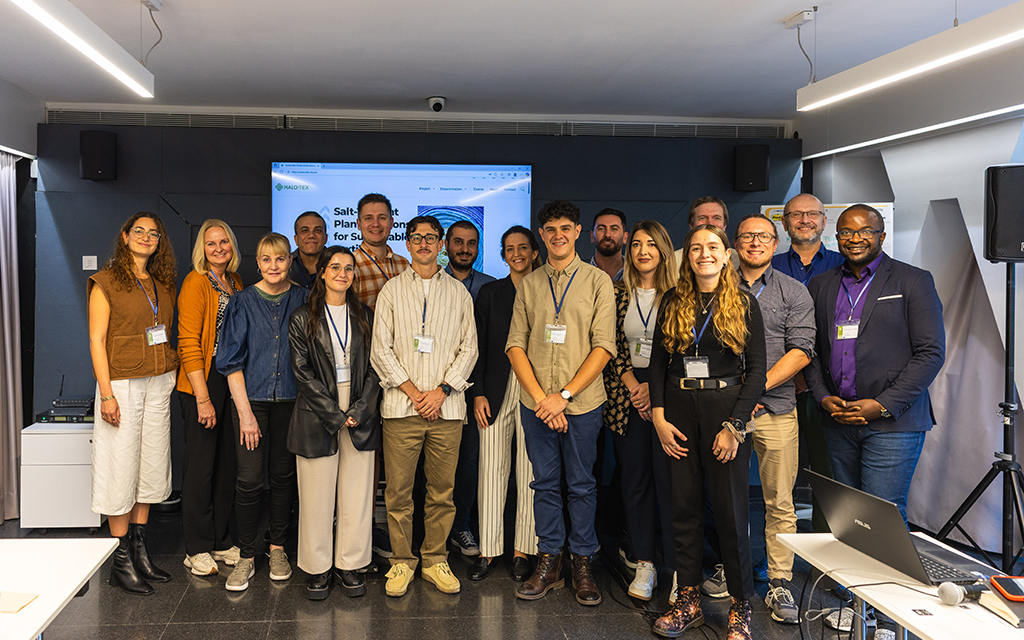
The HALO-TEX consortium met on 4–5 November for its Month 6 General Assembly meeting, hosted by KNEIA. The two-day session brought together all project partners to assess the technical and strategic progress of each work package, identify shared needs, and agree on priorities for the next phase. Discussions focused on building connections between activities, refining stakeholder engagement strategies, and ensuring that the project remains aligned with its mission to drive sustainable innovation in the textile sector.
Progress in Extraction and Lignocellulose Fractionation
Significant progress has been made in developing the extraction and lignocellulose fractionation process, which aims to process local halophyte feedstocks to remove salts and extract specific bioactive compounds using a patented, sustainable, and environmentally friendly method. Biomass is being treated to separate quality cellulose and lignin, with the goal of producing sustainable materials for textile and cosmetic applications.
Over the past months, the team has:
- Developed a biomass supply plan to secure sufficient Sea Aster and Sarcocornia for project activities.
- Characterization of materials and feedstocks started.
- Performing characterization and extraction optimization.
- Advanced on feedstock preparation, sequential solvent extraction, chemical composition analysis, and detailed lignin/hemicellulose structural characterization.
This first phase represents a key step in establishing the project’s value chain, ensuring that each technical component aligns with HALO-TEX’s sustainability objectives.
Launching Communication and Outreach Strategy
Over the past months, HALO-TEX has been building its communication channels to connect science, sustainability, and society. The official website, launched in September 2025, is now the central space where visitors can explore the project’s goals, meet the consortium partners, and stay updated on results and upcoming activities. Alongside the website, new social media platforms and outreach materials are helping the project share progress and engage with stakeholders and the public. Through these efforts, HALO-TEX aims to reach a wider audience and make its scientific advances and sustainability mission accessible to everyone.
Stakeholder Engagement and Scientific Collaboration
In its first months, HALO-TEX carried out an initial stakeholder mapping and analysis to better understand the people and sectors connected to its work. This first assessment helps the consortium identify key groups, from biomass producers and landowners to industry partners, retailers, policymakers, researchers, and consumers, who play a role in shaping the project’s impact. By learning from these communities early on, HALO-TEX is setting the stage for meaningful collaboration and ensuring that its scientific progress can translate into real benefits for society.
Collaboration and Next Steps
The second day of the meeting focused on open discussions and exchanges among partners and work package leaders. These conversations were key to aligning next steps, identifying priorities, and shaping a clear path for the months ahead. The sessions highlighted the strong sense of teamwork within the consortium and a shared determination to combine science, innovation, and collaboration to move HALO-TEX forward and deliver real, sustainable results.